Market Makers: Art as a Tool for Promotion
Educator: Diane Longo, School Library Media Specialist
Cultural Partner: Basia Kurlender, Visual Artist, Cultural Events Organizer, and Graphic Designer
School: Brentwood High School
Grades: 10th- 12th
District: Brentwood Union Free School District
District NYSED link: https://data.nysed.gov/profile.php?instid=800000037066
Summary:
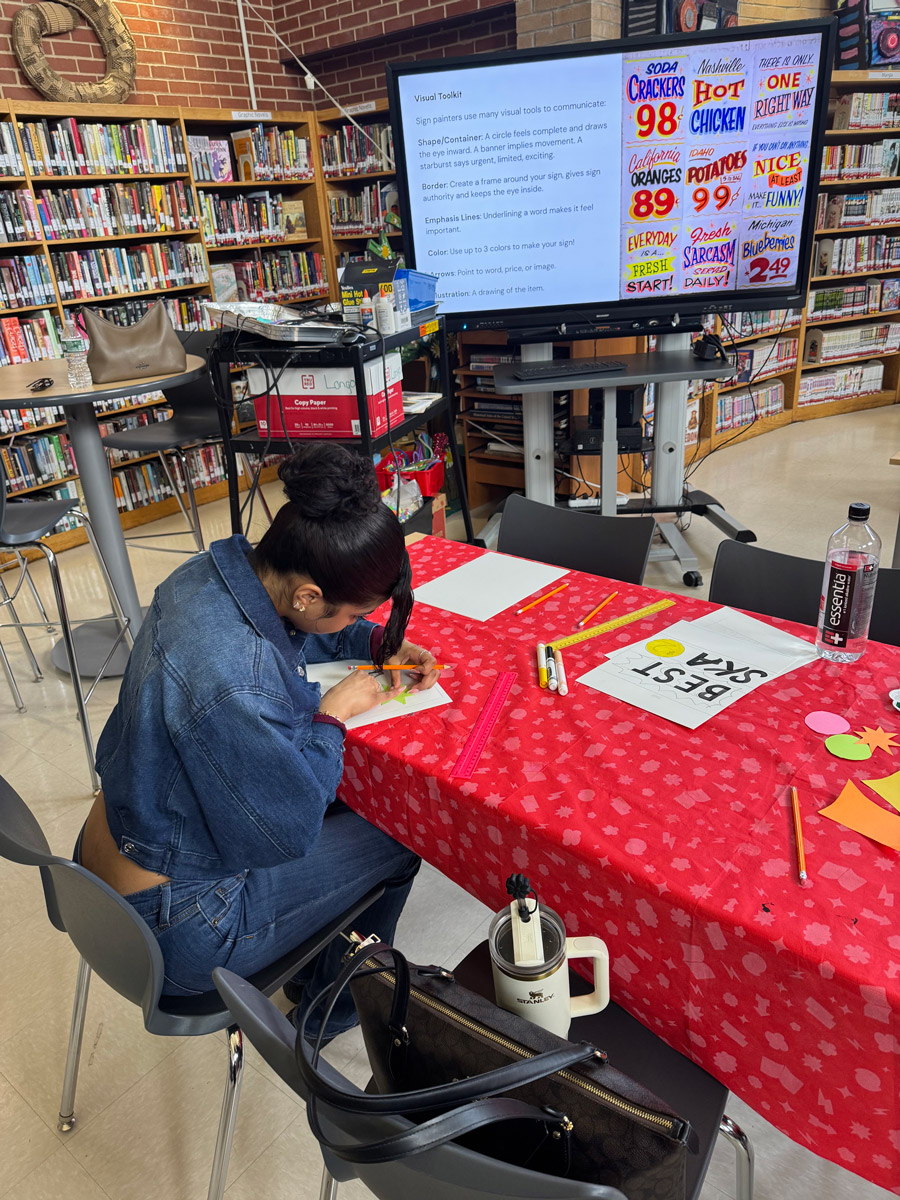
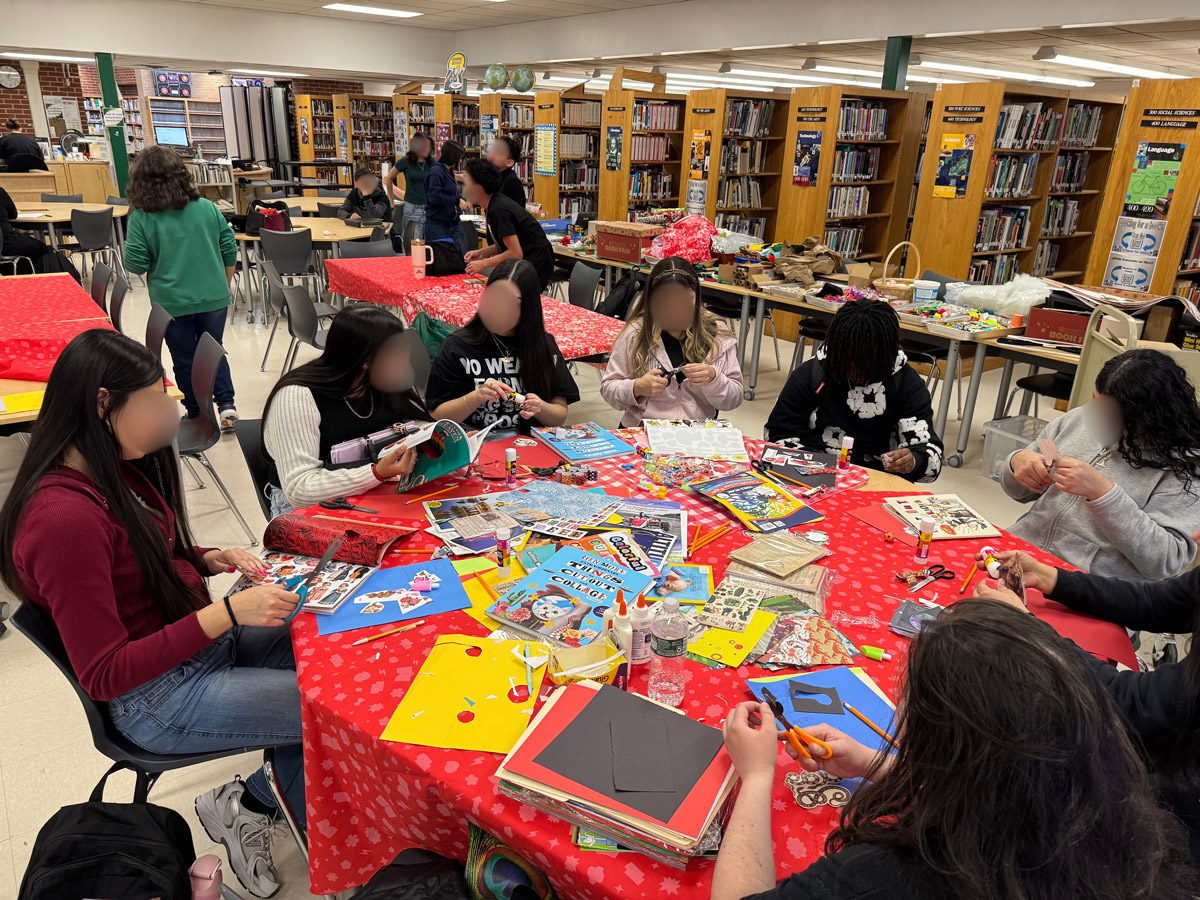
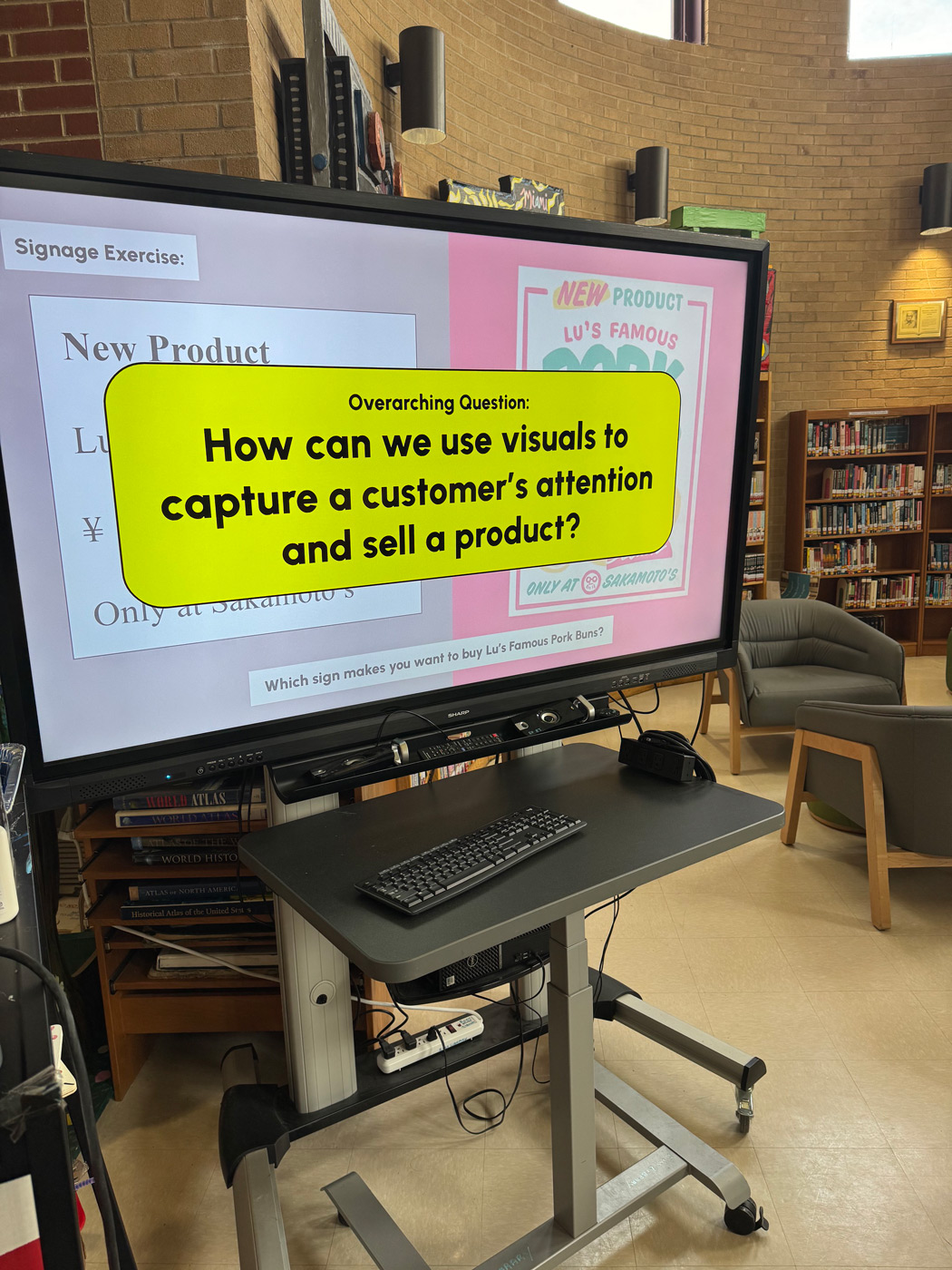
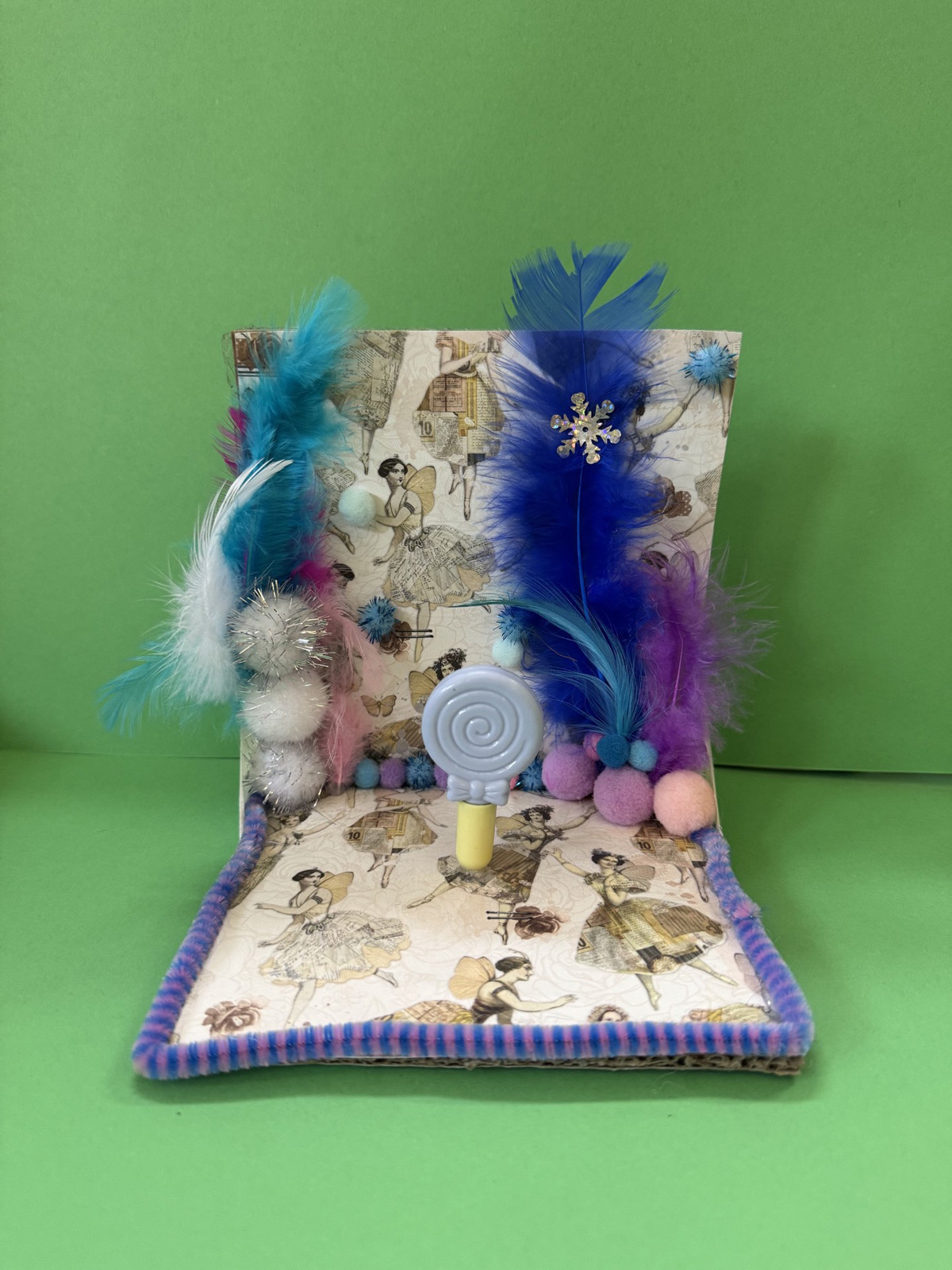
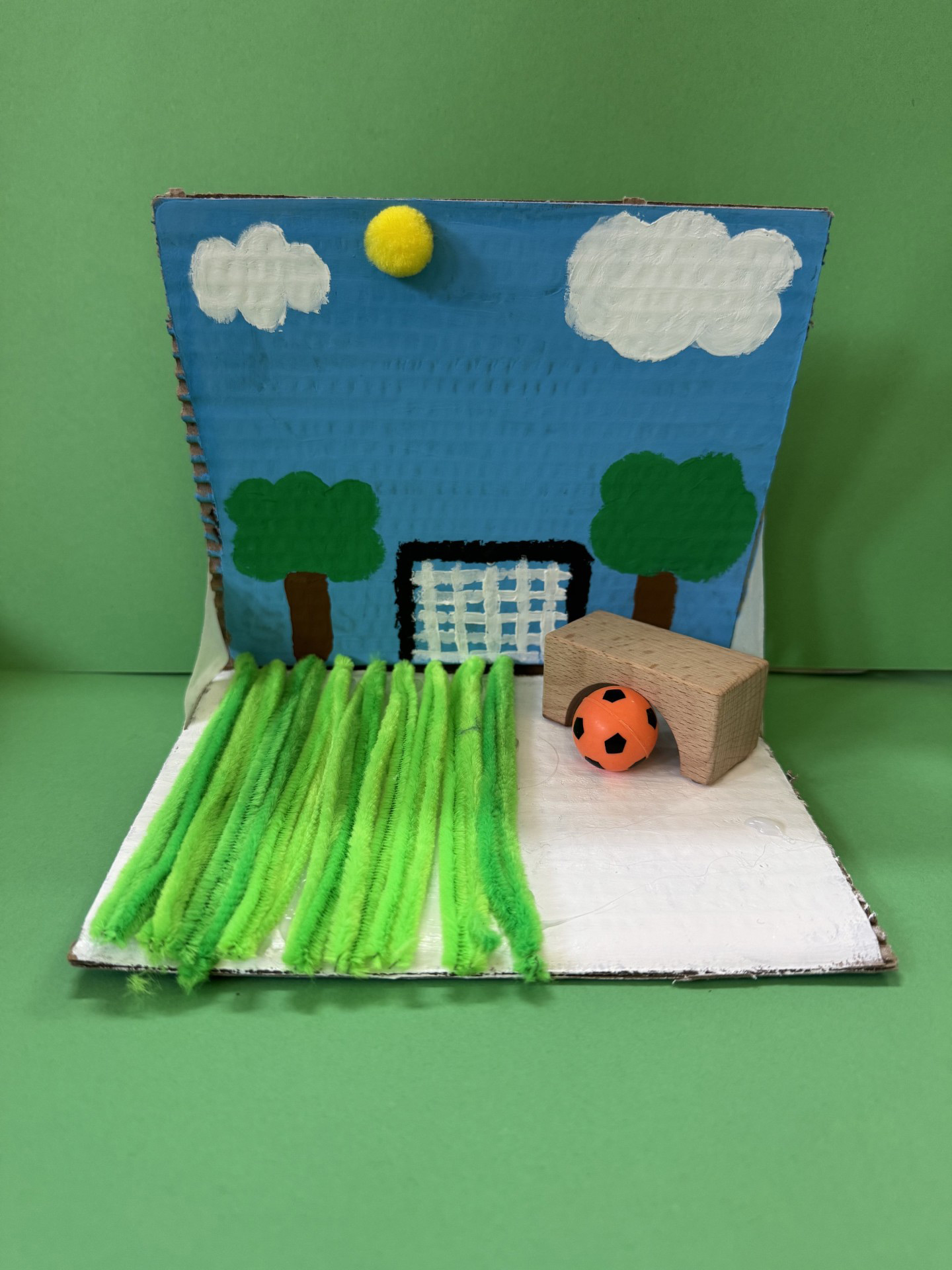
In this cross-disciplinary collaboration between business education and the arts, students explored the principles of visual marketing through hands-on creative experiences. They learned collage techniques to develop an understanding of composition, branding, and audience appeal, then applied these skills to design engaging window displays. To complete the project, students extended their learning by creating hand-painted signs that reflected key marketing concepts, blending artistic expression with real-world business applications. This project strengthened both their creative confidence and their understanding of how visual elements influence consumer behavior.
Rationale:
Often our students experience required business courses as abstract or disconnected from their lives. Through hands-on art-based learning, this unit activates those concepts by positioning students as creators, marketers, and decision-makers working within real constraints such as budget, audience, and ethics.
By integrating visual communication, copywriting, and design thinking, students developed transferable skills while exploring how businesses influence communities, culture, and civic life. This approach affirmed student voice, creativity, and lived experience, particularly for students from historically marginalized communities, while maintaining rigorous academic and career-connected expectations.
What learning goals/standards did this meet?
Arts:VA:Cr1.1.HSI – Use multiple approaches to begin creative endeavors
VA:Cr2.1.HSI – Engage in making works of art through experimentation, practice, and persistence
VA:Cr2.3.HSI – Collaboratively develop innovative ways to present ideas
VA:Cr3.1.HSI – Apply relevant criteria to examine, reflect on, and plan revisions for a work of art
VA:Re7.1.HSI – Hypothesize ways in which art influences perception and understanding
VA:Re8.1.HSI – Interpret art by analyzing how subject matter, context, and media shape meaning
VA:Re9.1.HSI – Establish relevant criteria to evaluate a work of art
VA:Cn10.1.HSI – Synthesize knowledge of cultural, social, and personal experiences to create meaningful works of art
VA:Cn11.1.HSI – Relate artistic ideas and works with societal, cultural, and historical context
CCCR: The project fosters a welcoming, affirming, and academically rigorous learning environment that intentionally centers and celebrates student agency, voice, and unique identities. By treating traditionally underserved students as capable business owners and creative directors, the curriculum effectively elevates historically marginalized voices. Students are given full autonomy over their design choices, empowering them to draw deeply upon their personal cultural backgrounds, lived experiences, and individual belief systems to solve complex promotional problems. High career-connected expectations are maintained throughout the unit as students tackle advanced professional concepts like strategic copywriting, material budget allocation, and typographic hierarchy. This inclusive framework actively counters dry, high-level business law curricula by connecting physical, hands-on production directly to students' social needs and personal inventiveness, fostering deep self-empowerment and a positive self-image.
CR-S: The project fosters a welcoming, affirming, and academically rigorous learning environment that intentionally centers and celebrates student agency, voice, and unique identities. By treating traditionally underserved students as capable business owners and creative directors, the curriculum effectively elevates historically marginalized voices. Students are given full autonomy over their design choices, empowering them to draw deeply upon their personal cultural backgrounds, lived experiences, and individual belief systems to solve complex promotional problems. High career-connected expectations are maintained throughout the unit as students tackle advanced professional concepts like strategic copywriting, material budget allocation, and typographic hierarchy. This inclusive framework actively counters dry, high-level business law curricula by connecting physical, hands-on production directly to students' social needs and personal inventiveness, fostering deep self-empowerment and a positive self-image.
Outcomes:
Students’ learning has expanded as a result of this project because now they…
KNOW…
- Key principles of visual marketing, including composition, branding, and audience appeal
- Basic collage techniques and how visual elements (color, layout, imagery) influence perception
- The purpose and impact of window displays and signage in real-world business settings
UNDERSTAND…
- How visual design directly influences consumer behavior and decision-making
- The connection between artistic choices and effective marketing strategies
- That creativity and business concepts can work together to communicate messages and attract audiences
ARE ABLE TO…
- Create visually engaging collages that demonstrate intentional design and marketing concepts
- Design and construct window displays that communicate a clear message to a target audience
- Produce hand-painted signs that apply branding and persuasive techniques
- Analyze visual marketing examples and explain how design elements affect viewers
- Apply both creative and critical thinking skills to real-world business and artistic challenges